World Song (Weltenlied)For Baritone and Piano
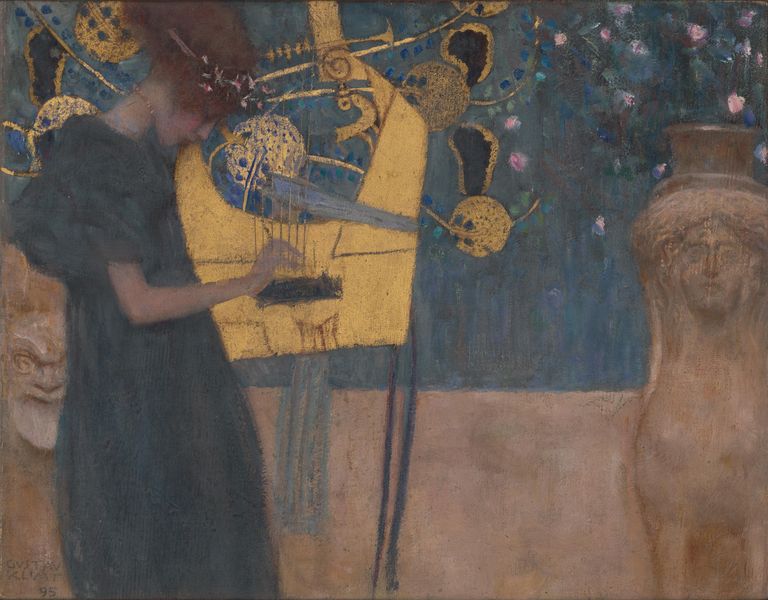
The subject of the Weltenlied is music itself: its arising ‘from a comprehending origin’, love as the impulse that conditions it and shapes its continuing resonance, its flowing and its outpouring — joining, like infinite possibilities of combination between horizontal (linear-melodic) and vertical (harmonic) forces, into ‘spherical patterns’ and onwards to the apotheosis of a triumph.
This all-encompassing vision the music, too, seeks to render audible and experiential — a music that draws on the Songs in the Slipping Away (Lieder im Entgleiten) for Baritone and Large Orchestra, yet in the form of the piano song is more concentrated, harmonically plainer, and forgoing the opulence of orchestral sound.
The opening motif in the piano, led quasi-canonically across a wide ambitus between bass and upper voice, is taken up by the voice at a different tempo and developed further. The motif is ascending, embodying a ‘rising of all sounds’ (in the orchestral songs, a rising of time), the texture polymetric, interpreting that flooding of music joining into patterns.
A brief fanfare; then static chord sequences bearing something hymn-like within them, which in the poem by Hartmut Oliver Horst ‘lead to triumph’. A yearning invocation of Euterpe — Muse of poetry as of music — by the singing voice, rendered through static, columnar chords: an almost-standing-still of the music, an image of the essence of the ‘eternally inviolate’.
A further transition in the piano, drawing on motifs and ideas from the orchestral songs — dedicated posthumously to Dietrich Fischer-Dieskau — reduced to their essentials.
The closing strophe of the poem turns mythology towards the mystical with its portrayal of a music that, ‘growing in its flowing … in wandering days … encircles the flowers of the future’.
The music of the final strophe of the piano song is in two parts. First, a resumption of the rhythmic momentum of the opening — enriched by arpeggios and chords set in imitation of the harp — then the true Da capo. The tempo is broadened, the canonic motif expanded to its maximum ambitus by octave displacement in bass and upper voice. A poetic fading of the singing voice; the piano traverses the entire tonal space, closing with dissonant sonorities of all the softer an effect for it — heard with ‘ever-new ears’, hearkening to a return of music — immortal though it be — ‘in the endless kiss’.
Weltenlied (translation)
From a comprehending origin all sounds arise.
Within the soul there lives, as sounding harmony, their impulse: love.
Brightness of the moment
when the innermost flood — joined into spherical patterns —
leads its vibrant force to triumph.
To proclaim the infinite,
there came from hallowed regions the eternally inviolate
and pours forth song
over us, the earthly: Euterpe.
Hearken — she speaks to you from time long buried.
Sound of the flute, that softly permeates and binds all life.
Hearken — she bears you away.
A voice from without, growing in its flowing,
scarcely to be interpreted, yet one with all it touches.
In wandering days she encircles the flowers of the future,
feeling longing, itself, since it cannot die,
audible to ever-new ears,
vibrating and returned home in the endless kiss.
Hartmut Oliver Horst
Weltenlied (original text as set)
Aus verständigtem Ursprunge steigen alle Klänge.
Inmitten der Seele lebt als tönende Harmonie ihr Impuls: die Liebe.
Helle des Augenblicks,
wenn innerste Flut – zu sphärischen Mustern verbunden –
ihre schwingende Kraft zum Triumphe führt.
Zu künden das Unendliche
kam aus heiligen Bezirken die ewig Unversehrte
und rauscht Gesänge
über uns, die Irdischen: Euterpe.
Lausche, sie redet zu dir aus verschütteter Zeit.
Ton der Flöte, der Leben leise durchdringt und bindet.
Lausche, sie führt hinweg.
Stimme von außen, im Durchströmen wachsend,
kaum zu deuten, doch eins mit allen, die sie berührt.
In wandernden Tagen umkreist sie die Blumen der Zukunft,
die fühlende Sehnsucht, sich selbst, da sie nicht sterben kann,
mit immer neuen Ohren vernehmbar,
vibrierend und heimgekehrt im unendlichen Kusse.
Hartmut Oliver Horst